

Eman, 25
I can predict almost anything with data. Almost. (You're the outlier I'm hoping for.)



























Say salaam
Chat with me Chat ready
Pick a language, tap a quick reply — or just type your own message.

Fun compatibility quiz
Are we a vibe?
Five quick questions. No wrong answers — just for fun.
Quick facts
Tap a card
Your turn
Quick poll
Which should be Eman's first date with her future partner?
Thanks — your vote is saved in this browser.
Keep the vibe going
Meet more profiles
Tap any card to open their page — chat, quiz, facts and polls are waiting inside.

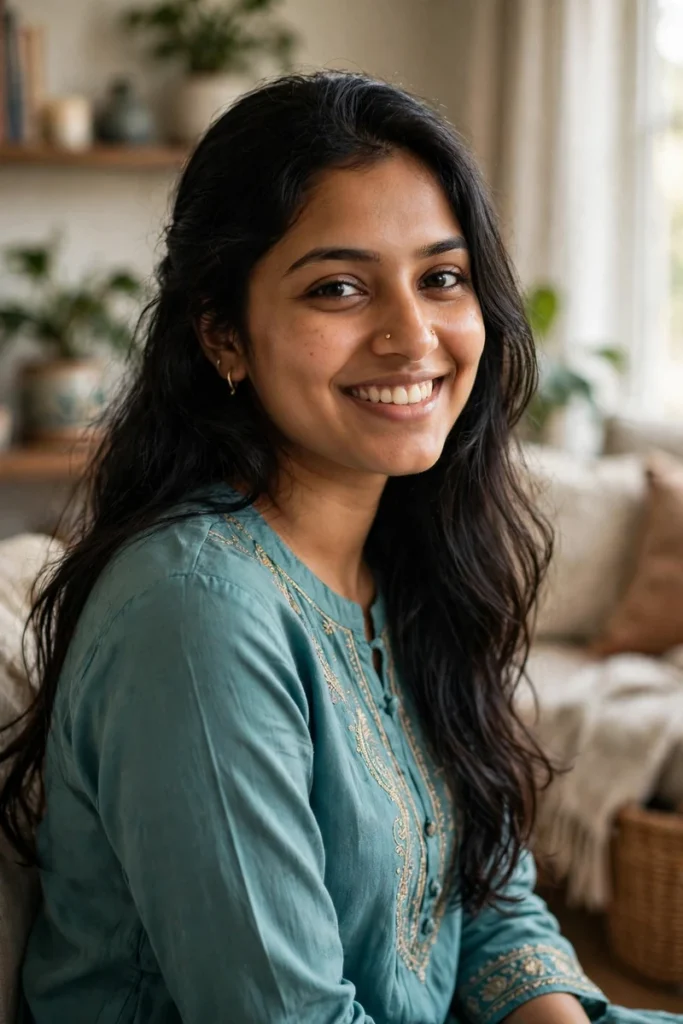


My mornings run like a well-tuned model. 6:40 — alarm. 6:55 — the smell of my father’s kopi-o drifting from the kitchen of our Tampines flat, dark and sweet enough to wake the dead. 7:10 — the MRT, where I stand in my exact favourite spot by the third door of the second carriage, because after two years I have optimised my commute down to the minute. My mother says I was organising my toys by colour before I could read. She is not exaggerating.
I’m Eman, twenty-five, a data scientist, and yes — I see patterns everywhere. The way the auntie at the hawker centre remembers exactly how I like my chicken rice: extra ginger, no cucumber. She judged me once and never again. The rhythm of monsoon rain against our windows in December. The probability that my Grab driver will ask where I’m from before the second traffic light — spoiler, it is 94%. I checked. My friends find this alarming. I find it comforting.
People think data science is all cold numbers and glowing screens, but my work starts with stories. I build models that predict which bus routes will be crowded before the morning rush, so planners can add buses where grandmothers and schoolchildren need them most. Last quarter, my model shaved six minutes off the average commute on three feeder routes. Six minutes does not sound like much until you multiply it by forty thousand commuters — then it sounds like giving a small city its mornings back. That is the part I love: the numbers are never just numbers. They are people, aggregated.
Singapore is the perfect city for someone like me, because Singapore itself is a dataset that works. Everything here has a system — the hawker centre queue that moves with military precision, the MRT map a five-year-old could navigate, the way the whole island smells of rain ten minutes before the sky opens. I grew up believing the world was orderly. Then I started thinking about love, and discovered that human hearts are the one dataset that refuses to be cleaned.
My ah-ma — my grandmother — is my favourite outlier. She grew up in a kampong, married at nineteen, raised four children, and has never touched a computer. She thinks my job is “counting things for the government,” and honestly, she is not entirely wrong. Every Sunday she makes lor mee from scratch and interrogates me about marriage with the precision of a database query: husband, aged twenty-six to thirty-two, kind equals true. I told her my own model has more features than that. She told me to eat more.
Weekends are sacred and strictly scheduled — I am Singaporean, after all. Saturday mornings: the wet market with my mother, where I hold strong opinions about fish freshness that I will defend with data. Saturday afternoons: reading at the National Library, or walking the Rail Corridor with my camera, photographing the strange wild green that survives between our concrete. Sunday: family lunch, then the hawker centre downstairs for chendol, because some variables in life should never be optimised. The gula melaka must flow.
I will be honest about my quirks, because a good model discloses its assumptions. I alphabetise my spice rack. I keep a spreadsheet ranking every laksa stall within a five-kilometre radius — the winner is a closely guarded secret, and no, I will not share the file. I cry at National Day parades; something about forty thousand people singing the same song breaks my feature engineering completely. And I talk to my plants. They are thriving, which I choose to interpret as statistically significant.
What am I looking for? Someone who understands that love, like data, is mostly about showing up consistently. Grand gestures are outliers — impressive, but rare, and often noise. I want the steady signal: the good-morning text, the remembered coffee order, the person who notices when my laugh sounds tired. I want someone curious, because curiosity is the one feature that predicts everything good. And someone who will not mock my spreadsheets — or better, someone who keeps their own.
There is a specific Singaporean magic hour I want to share with the right person: just after the rain, when the whole city steams gently and the sky turns the colour of teh-o, and the hawker centres fill with that particular roar of a thousand conversations and clattering bowls. We would get satay and sugarcane juice, and I would tell you about the time my model failed spectacularly — because it did, once, gloriously — and you would tell me something true. That is the dataset I am building now: one honest conversation at a time.
My grandmother says the best things in life cannot be measured. As a data scientist, I am professionally obligated to disagree — and as her granddaughter, I am personally terrified she might be right. So here is my hypothesis, stated plainly: somewhere out there is a person whose weird matches my weird, whose kindness is not an outlier but the mean. I would like to test that hypothesis over a very long dinner. The laksa place is already picked out. The spreadsheet approves.
Profiles on F-Tinder PRO are fictional, AI-generated illustrations for entertainment. Chat replies are automated; quizzes and polls run in your browser. No real matches are guaranteed.
Engagement experience crafted by Azeem Rajpoot