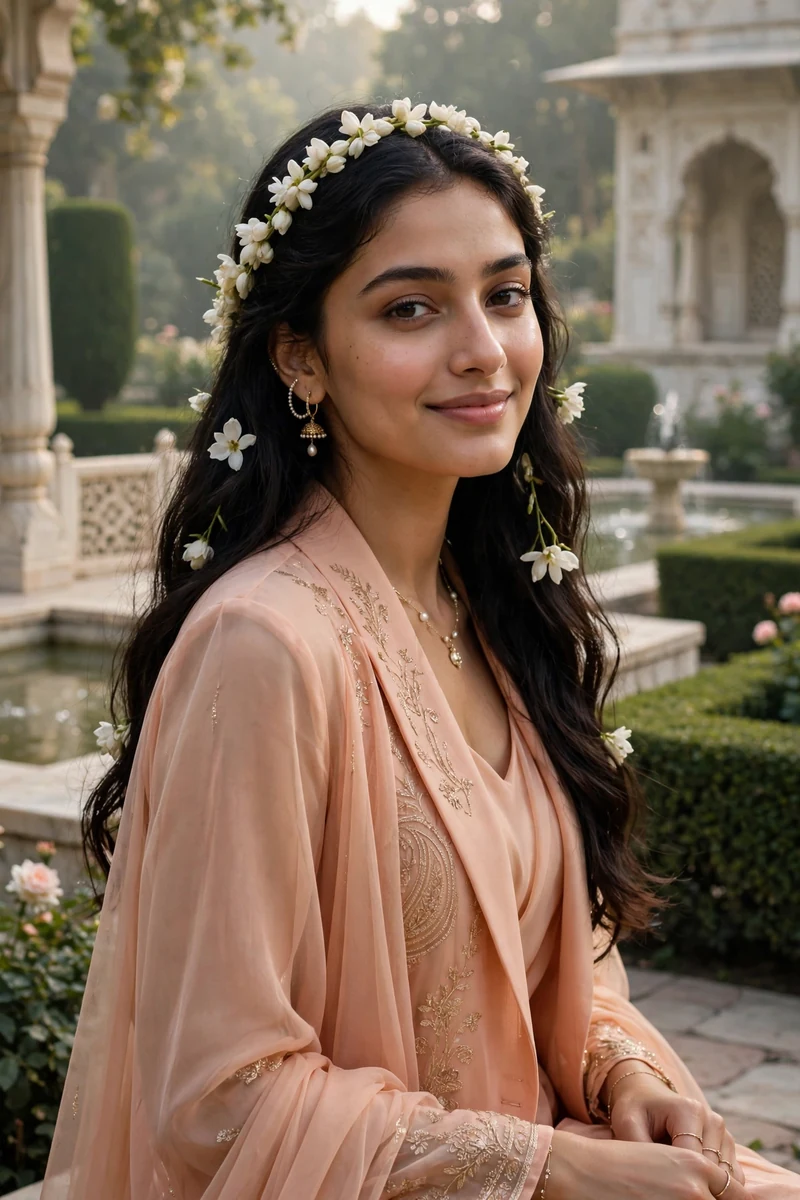
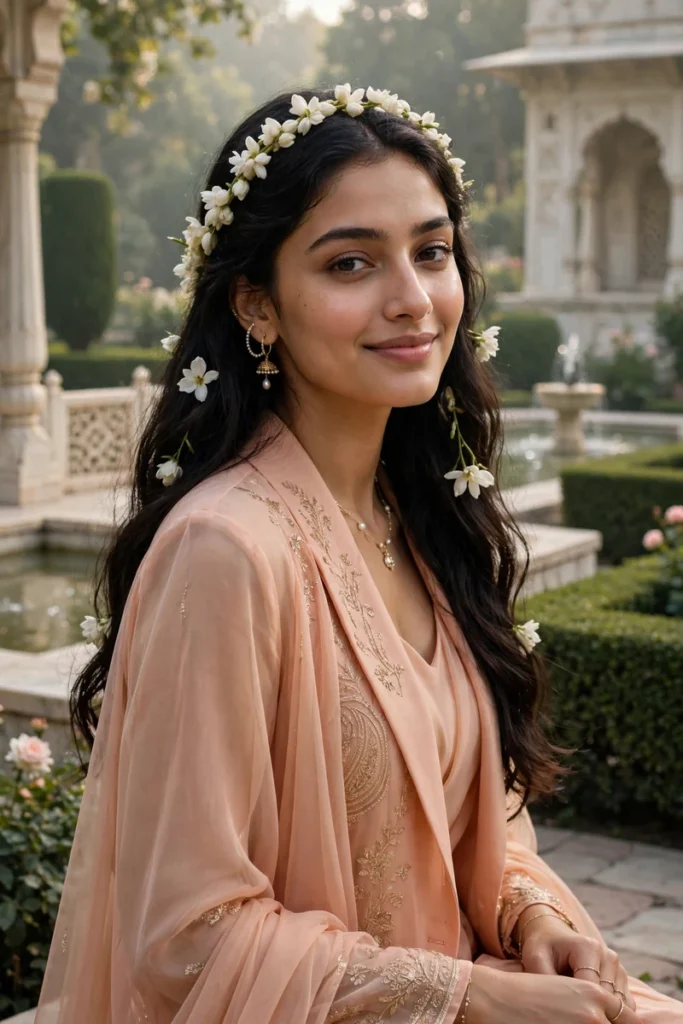
Dua, 24
I dispense the right dose of everything — except love, which I take in full.




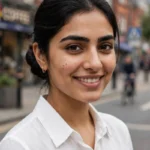



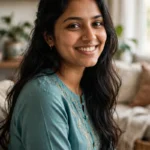









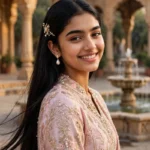








Say salaam
Chat with me Chat ready
Pick a language, tap a quick reply — or just type your own message.
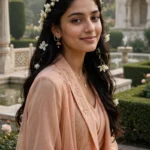
Fun compatibility quiz
Are we a vibe?
Five quick questions. No wrong answers — just for fun.
Quick facts
Tap a card
Your turn
Quick poll
Where should Dua take her future partner first in Lucknow?
Thanks — your vote is saved in this browser.
Keep the vibe going
Meet more profiles
Tap any card to open their page — chat, quiz, facts and polls are waiting inside.
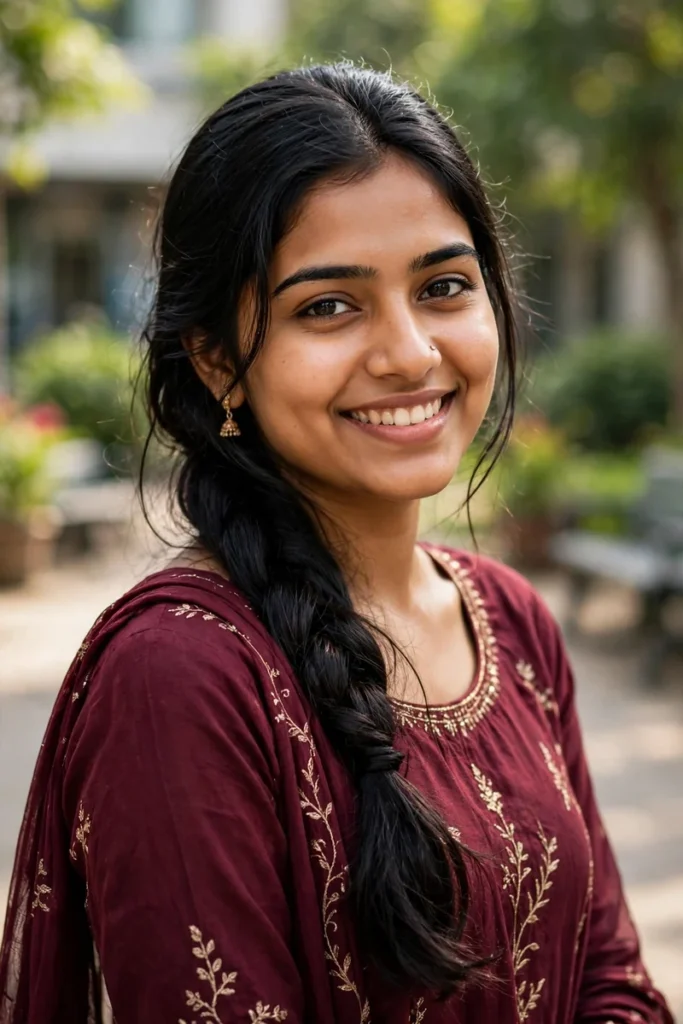
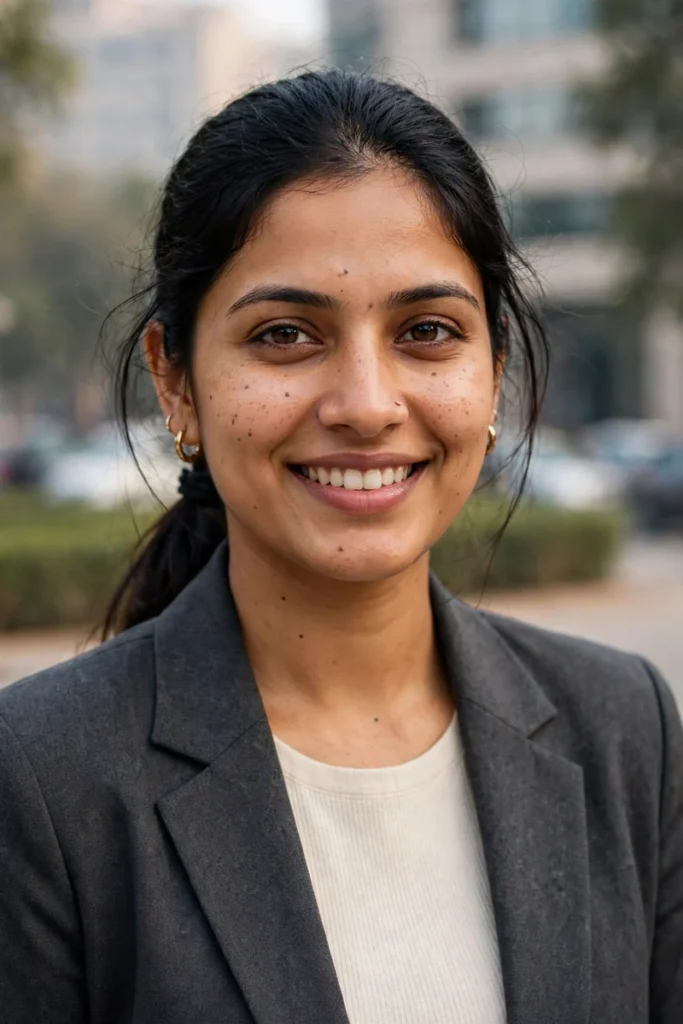
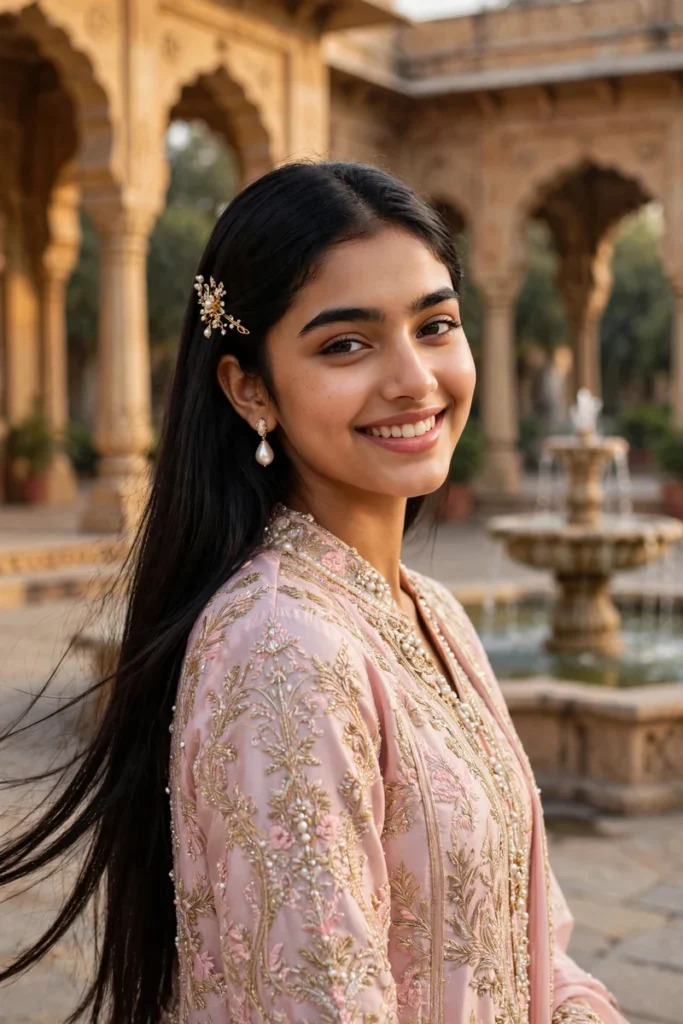

In Lucknow, the day begins with tehzeeb. My day begins with my grandmother’s voice calling from the courtyard — “Dua beta, chai!” — and the smell of adrak-elaichi chai curling through our old house in Chowk like a blessing. I drink it on the veranda while the old city wakes up: the azan from a distant mosque, the vegetable seller’s rhythmic call, pigeons scattering off the Rumi Darwaza in a grey silk flurry. My mother says I have my father’s scientific mind and my grandmother’s Lucknowi soul. I take both as the highest compliments.
I’m Dua, twenty-four, a pharmacist, and I spend my days at the intersection of science and seva — service. My pharmacy sits on a busy lane near Aminabad, and it is, I have discovered, much more than a shop. It is where the anxious mother comes at midnight for her child’s fever medicine. Where the old uncle argues — lovingly — that his blood pressure tablets are “too bitter” and I must find him a sweeter brand, as if bitterness were negotiable. Where I explain, for the hundredth time, why antibiotics must be finished even when you feel better. I do it with a smile every time. The hundredth time matters as much as the first.
People underestimate pharmacists. They think we just hand over boxes. But behind my counter, I am part detective, part counsellor, part translator. A prescription is a puzzle: the doctor’s hurried handwriting, the patient’s worried face, the drug interactions hiding like uninvited guests. Last winter, I caught a dangerous interaction between two medicines prescribed by two different doctors to the same elderly patient. I called both doctors, sat with the family, and fixed it. That night, the patient’s daughter touched my feet — in Lucknow, this is the highest honour — and I went home and cried happy tears into my pillow.
Science is my profession, but Lucknow is my personality. This city taught me that grace is not weakness — “pehle aap” is not just politeness, it is a philosophy. The way a Lucknowi shopkeeper will lose a sale rather than rush you. The evening gatherings in old havelis where poetry is still recited the way it was two hundred years ago. The kebabs of the old city, which I maintain are a form of medicine — for the soul, dosage: as needed. I have lived here all my life, and I still discover a new story in every galli.
My grandmother is the keeper of our family’s tehzeeb and its chief marriage strategist. She wears chikankari like armour and wields her walking stick like a sceptre. “Dua,” she announced last Eid, “you heal everyone else’s family. When will you start your own?” — in front of thirty relatives. Thirty. I smiled the particular smile of a Lucknowi girl — sweet as sheer khurma, sharp as a scalpel — and said, “Dadi, even the best medicine needs the right time to work.” The relatives applauded. Dadi was not applauding.
Evenings are my favourite. After the pharmacy shutters close, I walk home through the old city as the lights come on — the Bara Imambara glowing gold, the smell of frying kebabs and ittar mixing in the air. Sometimes I stop at the Gomti riverfront and watch the water, and I think about molecules. I know, I know — but a river is just a very large solution, constantly diluting and renewing itself, and there is something deeply comforting about that. My friends tease me: “Dua sees chemistry everywhere.” I do. Love, I suspect, is also chemistry — the best kind, the kind you cannot synthesise in a lab.
I should confess my contradictions, because a pharmacist believes in full disclosure. I am a woman of science who will not begin an important task without my grandmother’s dua — her namesake blessing. I counsel patients on evidence-based medicine, then go home and drink my mother’s haldi doodh for every ailment, because some clinical trials have a sample size of one grandmother and a thousand years. I am modern in my lab coat and traditional in my jhumkas, and I refuse to choose between the two.
What do I seek in a partner? A man with tehzeeb — not the performative kind, but the real kind: who stands when an elder enters, who listens more than he speaks, who treats the waiter with the same respect as the CEO. Someone who will not be intimidated by a woman who knows the difference between atorvastatin and rosuvastatin. Someone with a sense of humour, because life behind a pharmacy counter teaches you that laughter is also medicine — side effects include smiling at strangers.
My dream is wonderfully ordinary, and I want it with my whole heart. A home where the evening chai is non-negotiable. A partner who walks with me through Aminabad as the shops light up, holding my hand past the chikankari stalls while I explain — at length — the difference between shadow work and jaali, and he pretends it is the most fascinating thing he has ever heard. (It is. He will learn.) Long drives on the ring road with old Bollywood songs. A life dosed carefully: two parts laughter, one part patience, taken daily with food.
My grandmother says “dua” means prayer, and that I was named for what my parents wished for most. I have spent twenty-four years answering to a prayer. Now I am ready to become someone’s answered one — and to find my own. If you are a man of science and soul, of adaab and laughter, then consider this my prescription, written in my best handwriting: one heart, to be taken with love. Refills unlimited.
Profiles on F-Tinder PRO are fictional, AI-generated illustrations for entertainment. Chat replies are automated; quizzes and polls run in your browser. No real matches are guaranteed.
Engagement experience crafted by Azeem Rajpoot