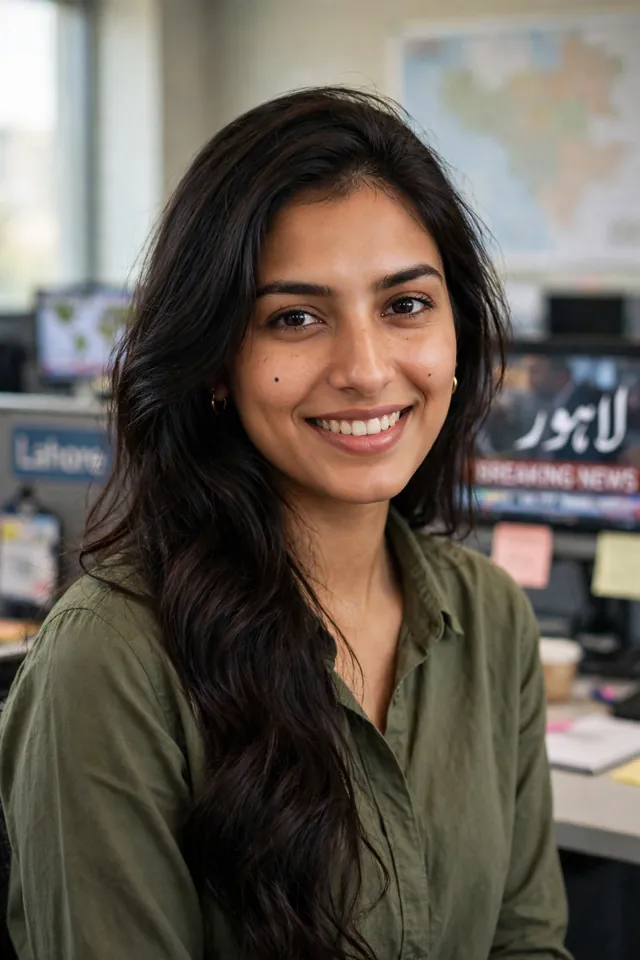
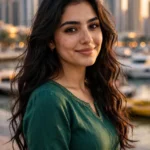
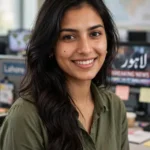
Rabia, 27
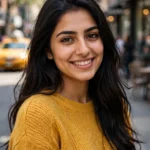
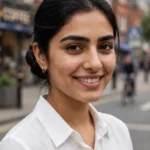
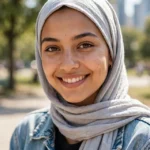
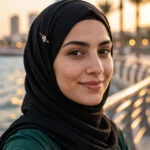
Lahore journalist chasing true stories — looking for a partner whose character would survive my fact-checking.


Say salaam
Chat with me
Pick a language, tap a quick reply — or just type your own message.
Fun compatibility quiz
Are we a vibe?
Five quick questions. No wrong answers — just for fun.
Quick facts
Tap a card
Your turn
Quick poll
Best Lahore experience?
Thanks — your vote is saved in this browser.
Keep exploring
Matched profiles
More profiles you might like to meet.
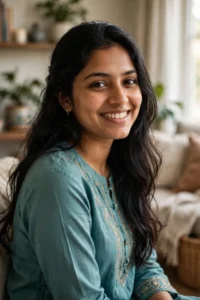
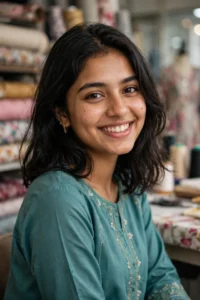
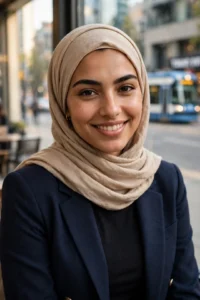
Lahore doesn’t whisper. It announces itself — in the sizzle of the food street at midnight, in the qawwali drifting over the old city walls, in the horns and the heat and the impossible, beautiful chaos of it all. I was born into that noise twenty-seven years ago, and somewhere along the way I decided my job would be to listen to it carefully and tell its stories straight. My name is Rabia, I’m a journalist, and I still get goosebumps when a story I’ve chased for weeks finally comes together on the page.
My father read the newspaper the way other men read scripture — slowly, completely, with strong opinions delivered over breakfast. By age ten I was stealing the paper before him and circling the stories I thought mattered, which drove him quietly mad. My mother, a school principal, taught me the other half of the equation: that behind every headline is a human being, and you don’t get to forget that just because you have a deadline. Between my father’s ink-stained fingers and my mother’s moral compass, I didn’t stand a chance of becoming anything else.
I studied mass communication at university in Lahore, and I was the annoying student who asked three follow-up questions when one would do. My professors called it “a nose for the story.” My friends called it “unable to let anything go.” Both were right. I interned at a local news channel, fetching chai and transcribing interviews at 2am, and loved every exhausting minute of it. Journalism, I learned, is 10 percent glamour and 90 percent showing up — in the rain, in the heat, when nobody else bothers.
The story that changed me wasn’t the biggest one I ever covered. Two monsoons ago, floods displaced villages outside Multan, and I went to report on the relief camps — the numbers, the logistics, the official statements. In one camp I met an old schoolteacher, Master Sahab, who had waded back into his flooded school three times to carry out the library books, armload by armload, because “books drown quietly, beta, and nobody notices.” I threw away my planned angle and wrote about him instead. The piece went further than anything I’d written — donations poured in, and six months later that village had a new school with his name on it. He still calls me on Eid.
That story taught me what my mother always knew: journalism isn’t about being first, it’s about being faithful. Faithful to the people who trust you with their pain. I cover a lot now — city politics, women’s issues, the disappearing crafts of the old city — and my rule is simple: I don’t write about anyone I wouldn’t sit and have chai with. So far, that rule has never failed me. The chai, however, has occasionally been terrible.
People ask if journalism is dangerous for a woman in Pakistan, and I’ll be honest: it demands courage, and it demands a family that has your back. I have both. My father still reads everything I write and calls with notes — “paragraph four is weak, beta” — and my mother still packs me food for long reporting days. My younger brother, an engineer with zero interest in news, is my most loyal reader anyway. We are a loud, argumentative, deeply loving unit, and every strong opinion I hold was first tested at our dinner table.
Off duty, I’m a photographer — street photography, mostly, the old city at dawn when the light turns the Mughal brick to honey. I haunt the food street with my cousins (nihari is a personality trait in this family), and at least once a month I end up at a qawwali night, sitting cross-legged on the floor, completely transported. Lahore gives you a hundred stories a day if you’re paying attention. My camera roll is proof.
What do I value? Truth, even when it’s inconvenient — especially then. Courage, the quiet kind: showing up, asking the question, standing by your words. And fairness — to the powerful and the powerless alike. My faith is my anchor; in a profession that runs on outrage, it reminds me to stay human. I also value joy fiercely. The world is heavy; a journalist who can’t laugh with her friends over gol gappay won’t survive it.
So who am I looking for? Someone between 28 and 34 who is intellectually curious — a man who reads, who asks questions, who isn’t threatened by a wife with a press card and opinions. He should respect my work, including the late nights and the difficult stories, because this isn’t a hobby I’m going to outgrow. Kind, honest, close to his family, with a sense of humor sharp enough to survive my father’s dinner-table debates. If you can’t handle being fact-checked affectionately, this won’t work.
My dreams are big and specific. I want to make a documentary about the disappearing crafts of Lahore — the potters, the calligraphers, the men who still repair things the world has decided to throw away. I want to write a book of reported essays about ordinary Pakistanis doing extraordinary things. And I want a home with a veranda, a bookshelf that sags in the middle, and a husband who brings me chai when I’m on deadline and doesn’t ask when the story will be done.
That’s me: a Lahore girl with a notebook, a camera, and an unreasonable belief that stories can change things — because I’ve watched them do it. If you believe that too, take the quiz below. Or just say salaam in the chat. I ask good questions, but I also give good answers. Ask my father. Actually, don’t — he’ll talk for an hour.
Profiles on Tinder PRO are fictional, AI-generated illustrations for entertainment. Chat replies are automated; quizzes and polls run in your browser. No real matches are guaranteed.